Open Museum · Digital Exhibition
How civilisations depict the human
Three sculptures, three civilisations, nearly two thousand years apart, and three incompatible ideas of what a person is. Walk through three rooms and look closely. The looking is the argument.
How would you like to visit?
The individual
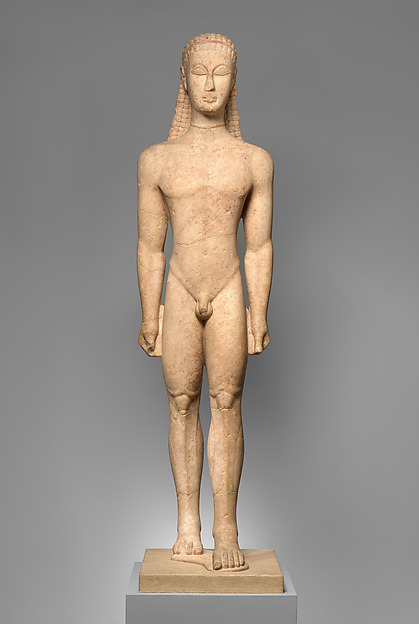
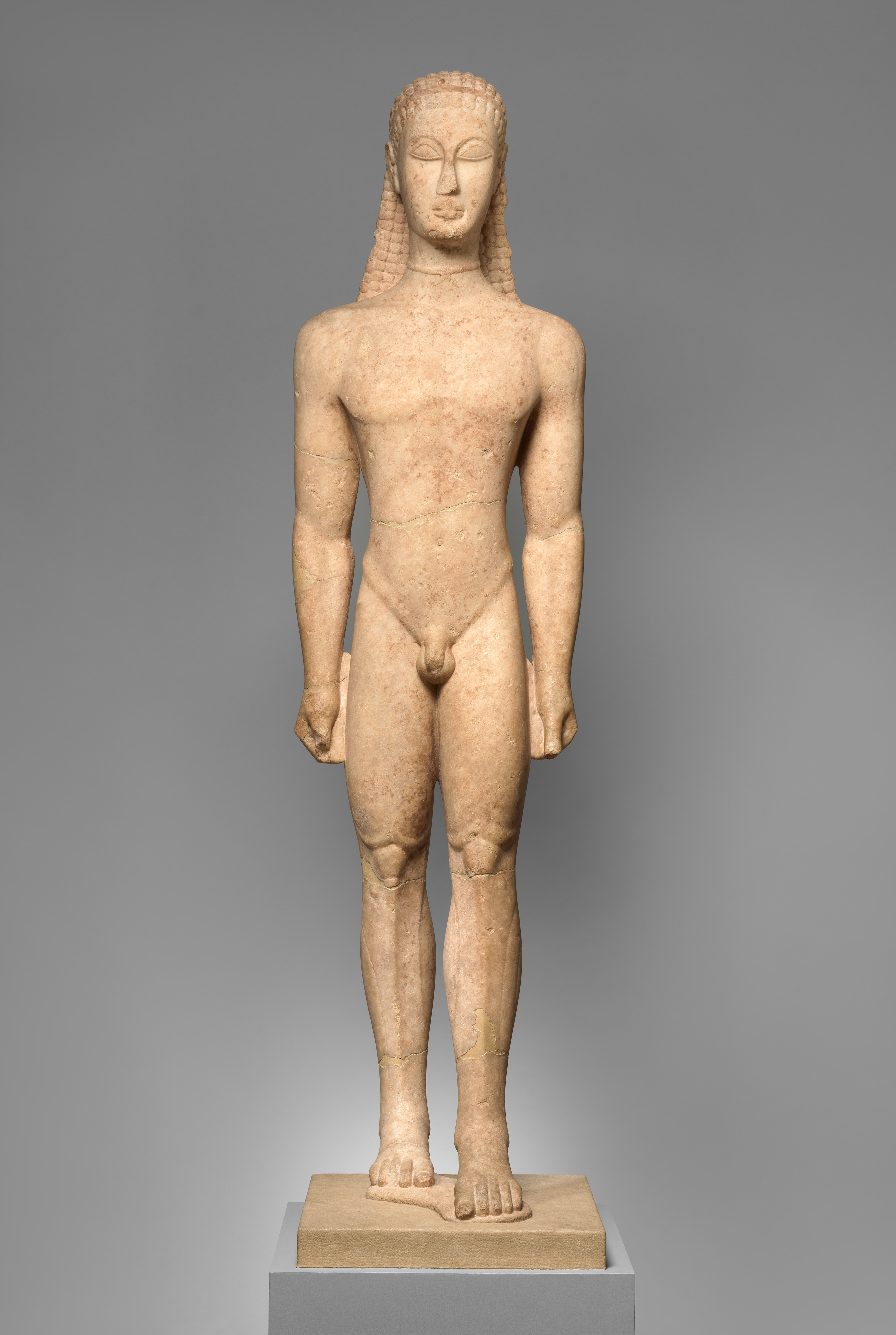
Marble statue of a kouros (youth)
Greek, Archaic · ca. 590–580 BCE · Naxian marble · The Metropolitan Museum of Art
A proposition of the human body as singular, frontal, and complete in itself: standing alone, and available to proportion, judgement, and idealisation.
Collection note
Open-access, verified at The Met · CC0 · met:253370 · Open Museum no. ST-26001-01 · available as a museum-grade print.
Wall text
Look at how he stands: feet planted, one foot forward, arms locked to the sides, shoulders level, the faint Archaic smile holding the face. Cut from Naxian marble around 590 BCE, this kouros is one body and nothing else: no companion, no setting, no god. You can read the Egyptian statues he descends from in the rigid symmetry, and watch, in the same stone, Greek sculpture beginning its long obsession: the human as an individual, to be studied, refined, idealised. The pose would loosen over two thousand years into the shifted weight of contrapposto, and on to Michelangelo's David. The marble the world queues to see comes later. The whole idea is already standing here.
The afterlife of the ideal body
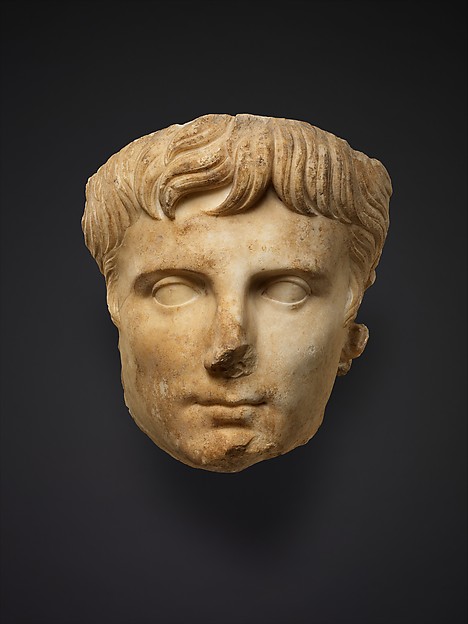
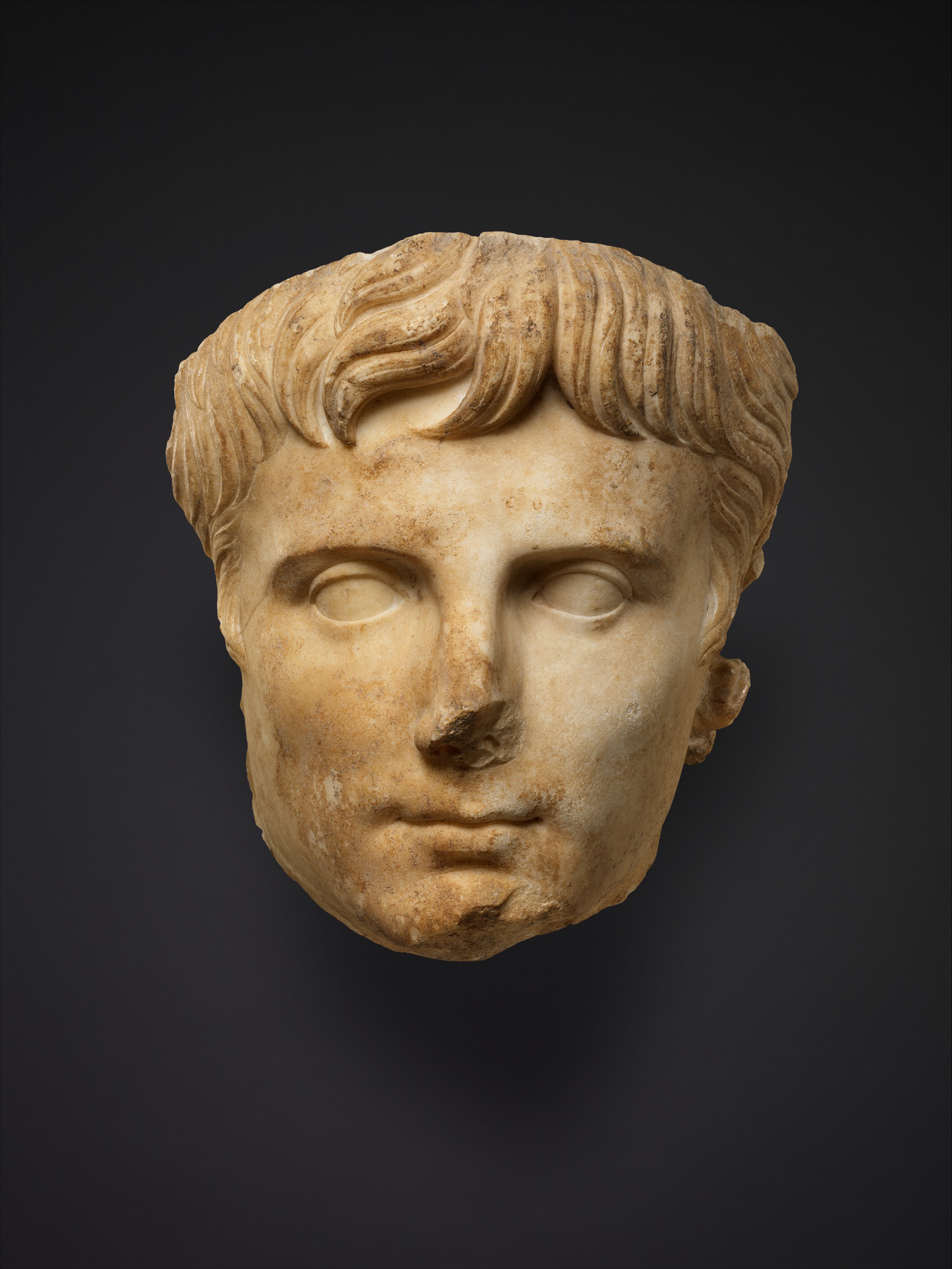
Marble portrait of the emperor Augustus · Roman, ca. 14–37 CE · Marble · The Met · CC0 · met:247993 · Open Museum no. ST-26001-02

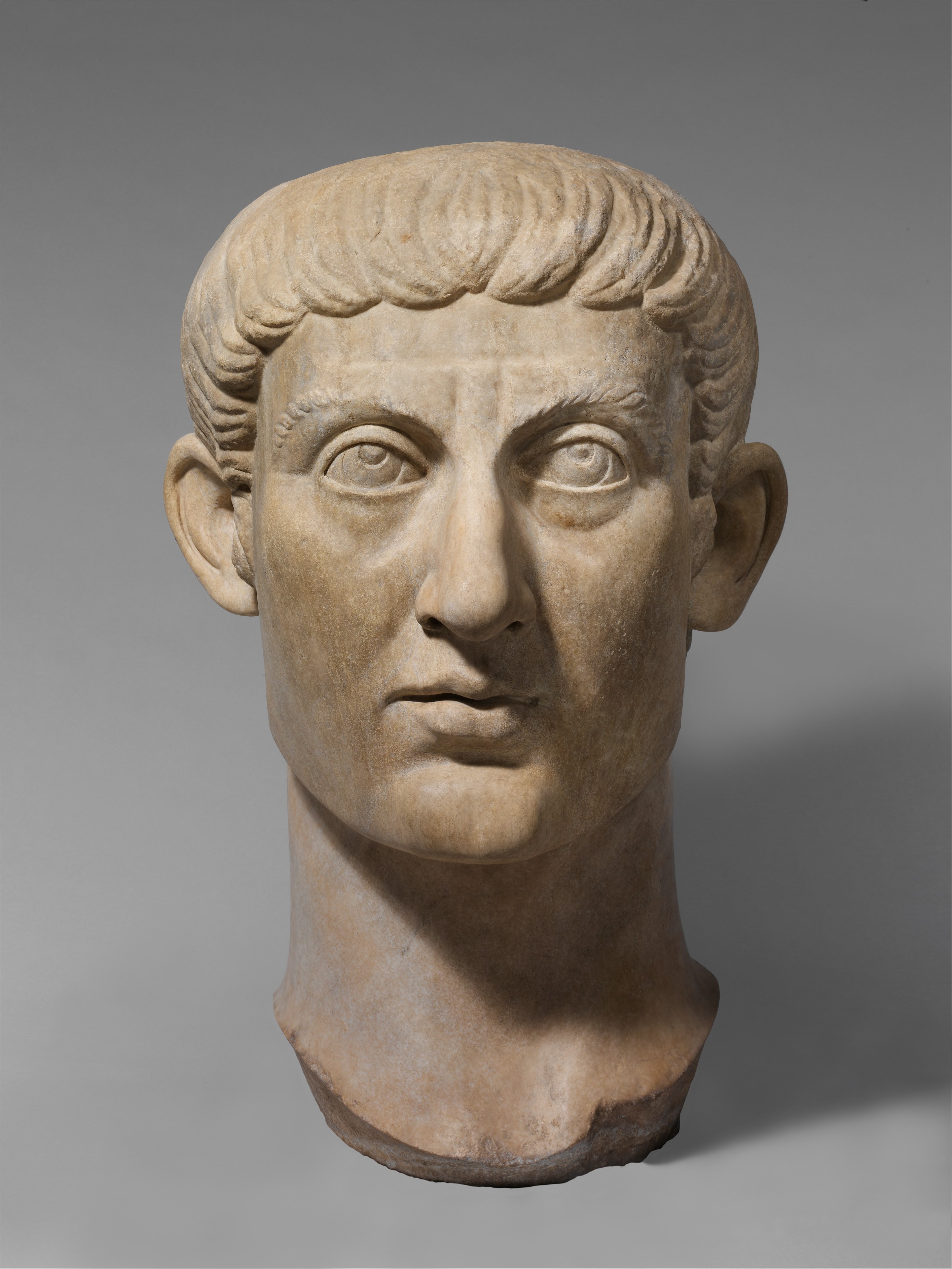
Marble portrait head of the Emperor Constantine I · Roman, ca. 325–370 CE · Marble · The Met · CC0 · met:252884 · Open Museum no. ST-26001-03
How long can a civilisation imagine the self as singular?
From the self perfected to the self released
The released self
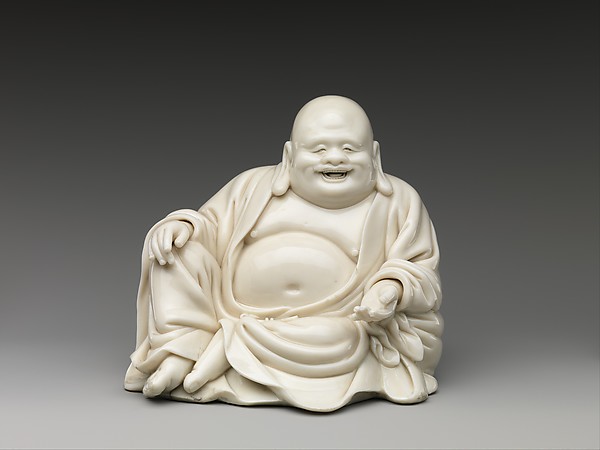
The monk Budai
Chinese, Qing dynasty · 17th–18th century · Dehua porcelain · The Metropolitan Museum of Art
A body that has stopped defending its own edges: slumped, soft, laughing. Selfhood loosened, not perfected. The opposite proposition to the room you just left.
Collection note
Open-access, verified at The Met · CC0 · met:42545 · Open Museum no. ST-26001-04 · available as a museum-grade print.
Wall text
Where the kouros holds itself rigid and frontal, Budai pours out of his own outline. The belly falls forward, the robe slides off a shoulder, the head tips back into laughter. This is not the body idealised but the body let go: a figure who has set down the work of being a singular, finished self. He is a figure later loved across the Chan and Zen traditions, where the joke can be the teaching. Modelled in Dehua porcelain, white and glassy, he is as carefully made as any Greek marble, and argues the reverse of everything it stands for. Selfhood here is something to be released, not refined.
Stillness, two ways

Buddha Seated in Meditation · 16th century · Copper alloy with gilding · The Met · CC0 · met:72301 · Open Museum no. ST-26001-05
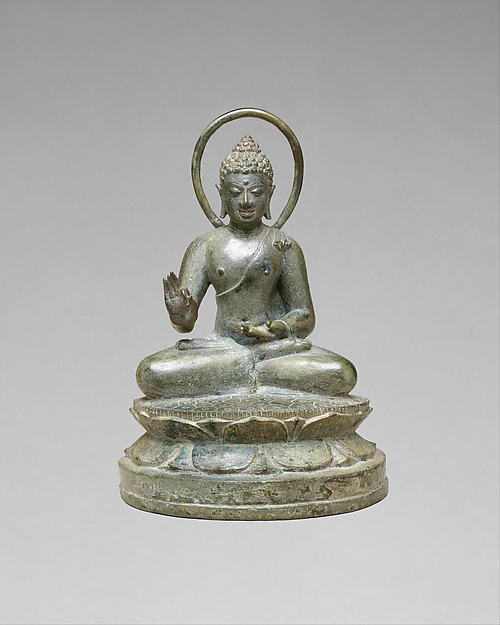
Seated Transcendent Buddha Vairochana · Java, ca. late 9th century · Bronze · The Met · CC0 · met:39020 · Open Museum no. ST-26001-06
Is a self that lets go of itself diminished, or free?
From the self released to the self completed in another
The sacred pair

Loving Couple (Mithuna)
Indian, Eastern Ganga dynasty · 13th century · Ferruginous stone · The Metropolitan Museum of Art
Here the single body is not the unit of meaning at all. Two figures lean into one another, and neither is complete alone. The self is finished only in relation.
Collection note
Open-access, verified at The Met · CC0 · met:38141 · Open Museum no. ST-26001-07 · available as a museum-grade print.
Wall text
The mithuna, the auspicious couple, stands at temple thresholds across India as a sign of wholeness and good fortune. Look at how the two bodies are carved: hips turned toward each other, an arm crossing a back, the weight shared between them. Neither figure is posed to be read on its own. Where the Greek statue insists the human is one and complete, and Budai lets that singular self dissolve, this stone makes a third claim entirely. A person becomes fully real in union with another. The body is not a monument to the individual but a half that seeks its pair.
Union as the divine subject
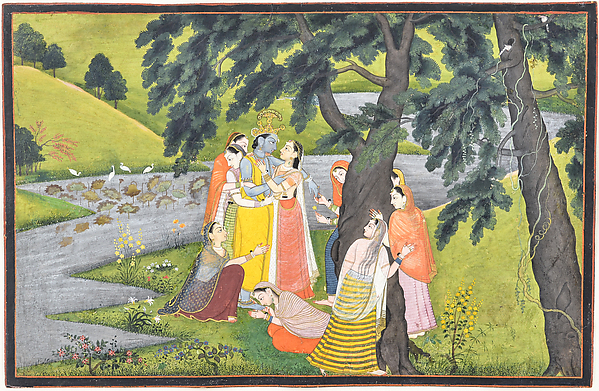
Krishna and the Gopis on the Bank of the Yamuna River, folio from a Gita Govinda · India, ca. 1775–80 · Opaque watercolor and gold on paper · The Met · CC0 · met:765654 · Open Museum no. ST-26001-08
If a person is completed by another, where does the self end?
Three rooms, three incompatible answers. Now see them together
Three theories of a body
Seen together, these works do not trace a single history of the human figure. They offer three incompatible answers to one question. In one, the body stands alone, a complete self; in another, it loosens its claim to selfhood; in the third, it becomes fully meaningful only in relation. The comparison does not resolve the differences. It makes them visible.
The writing can only point. The looking is yours.
Open Museum · Essay
How civilisations depict the human
Three sculptures, three civilisations, nearly two thousand years apart, and three incompatible ideas of what a person is.
A sculpture of a person is never only that. It is an argument, made in stone or bronze, about what a person fundamentally is: singular or shared, fixed or released, complete alone or completed only in another. Three works, drawn from three civilisations across nearly two thousand years, make three such arguments, and they do not agree.
The individual
Look at how he stands: feet planted, one foot forward, arms locked to the sides, shoulders level, the faint Archaic smile holding the face. Cut from Naxian marble around 590 BCE, this kouros is one body and nothing else: no companion, no setting, no god. You can read the Egyptian statues he descends from in the rigid symmetry, and watch, in the same stone, Greek sculpture beginning its long obsession: the human as an individual, to be studied, refined, idealised. The pose would loosen over two thousand years into the shifted weight of contrapposto, and on to Michelangelo’s David. The whole idea is already standing here.
The afterlife of the ideal body
How long can a civilisation imagine the self as singular?
The released self

Where the kouros holds itself rigid and frontal, Budai pours out of his own outline. The belly falls forward, the robe slides off a shoulder, the head tips back into laughter. This is not the body idealised but the body let go: a figure who has set down the work of being a singular, finished self. He is loved across the Chan and Zen traditions, where the joke can be the teaching. Modelled in Dehua porcelain, white and glassy, he is as carefully made as any Greek marble, and argues the reverse of everything it stands for. Selfhood here is something to be released, not refined.
Stillness, two ways
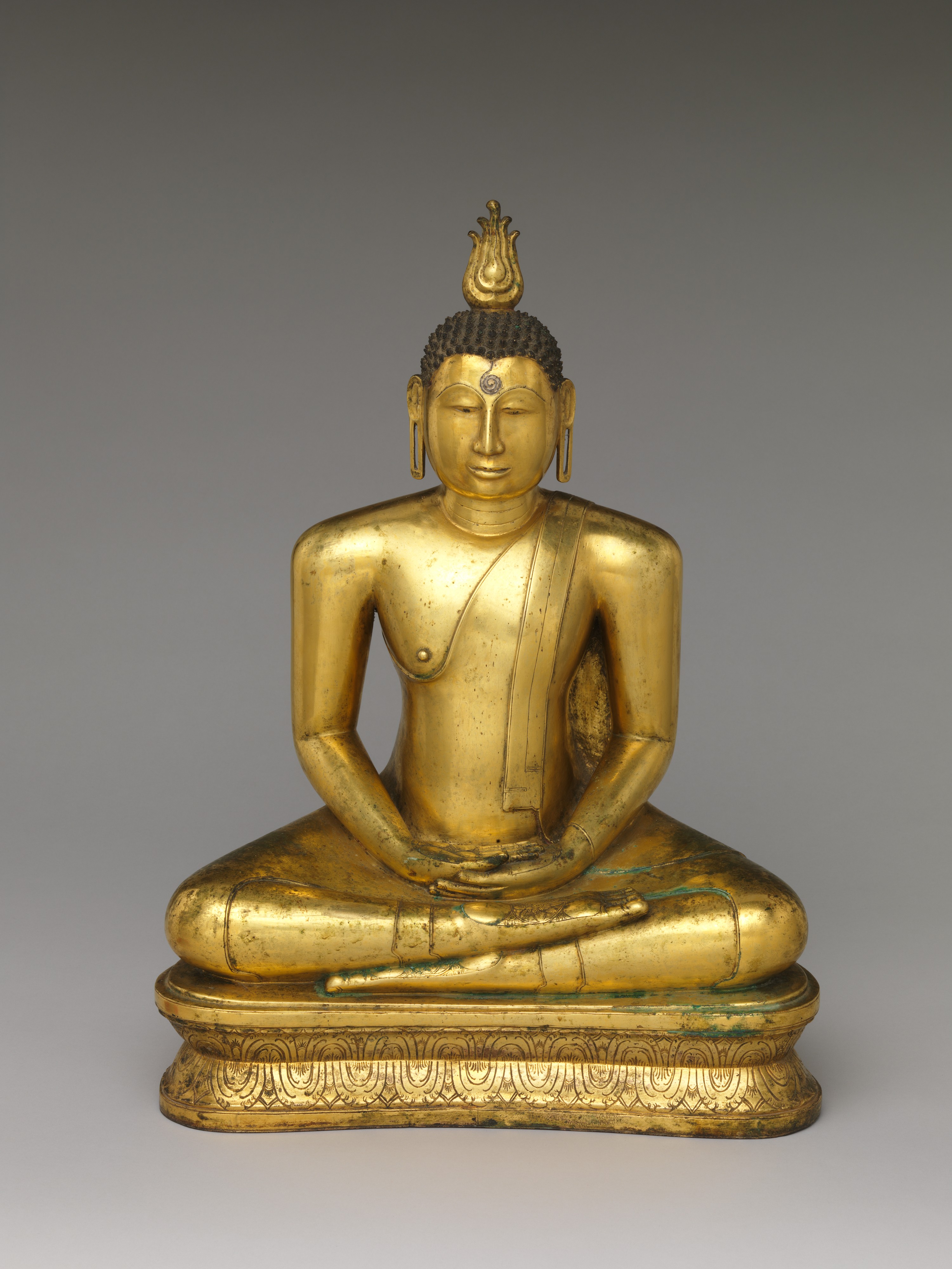
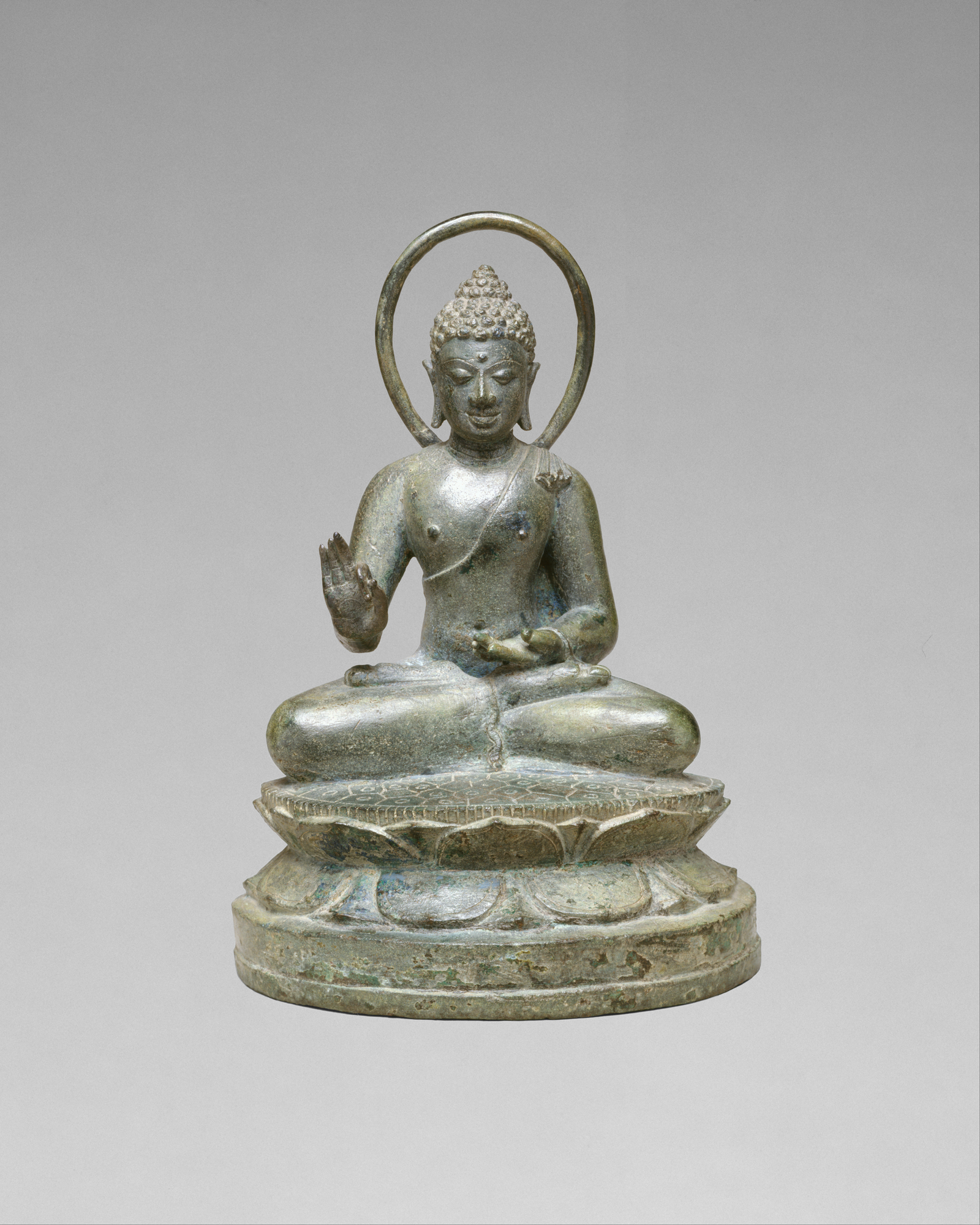
Is a self that lets go of itself diminished, or free?
The sacred pair
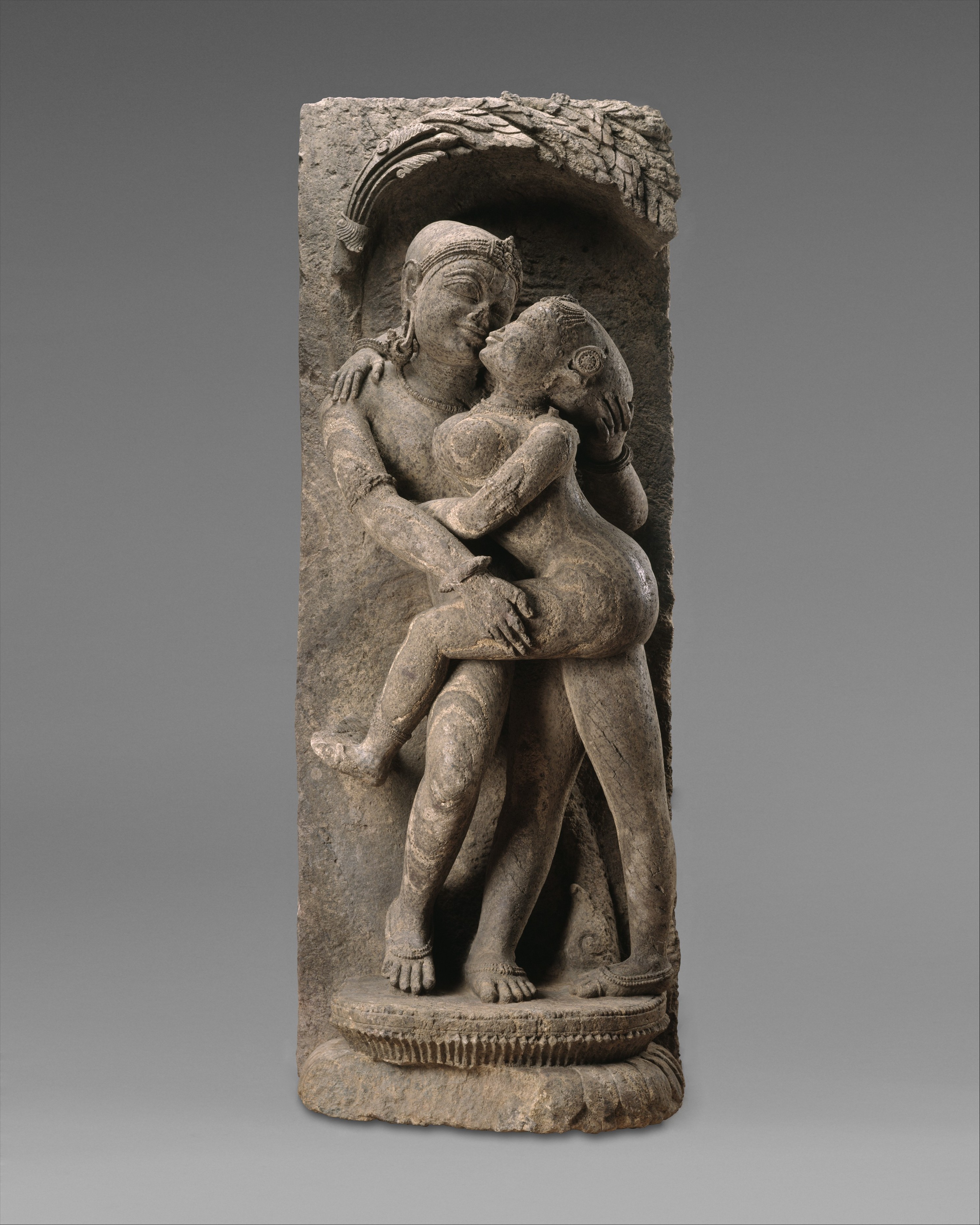
Here the single body is not the unit of meaning at all. Two figures lean into one another, and neither is complete alone. The mithuna, the auspicious couple, stands at temple thresholds across India as a sign of wholeness and good fortune: hips turned toward each other, an arm crossing a back, the weight shared between them. Where the Greek statue insists the human is one and complete, and Budai lets that singular self dissolve, this stone makes a third claim entirely. A person becomes fully real in union with another. The body is not a monument to the individual but a half that seeks its pair.
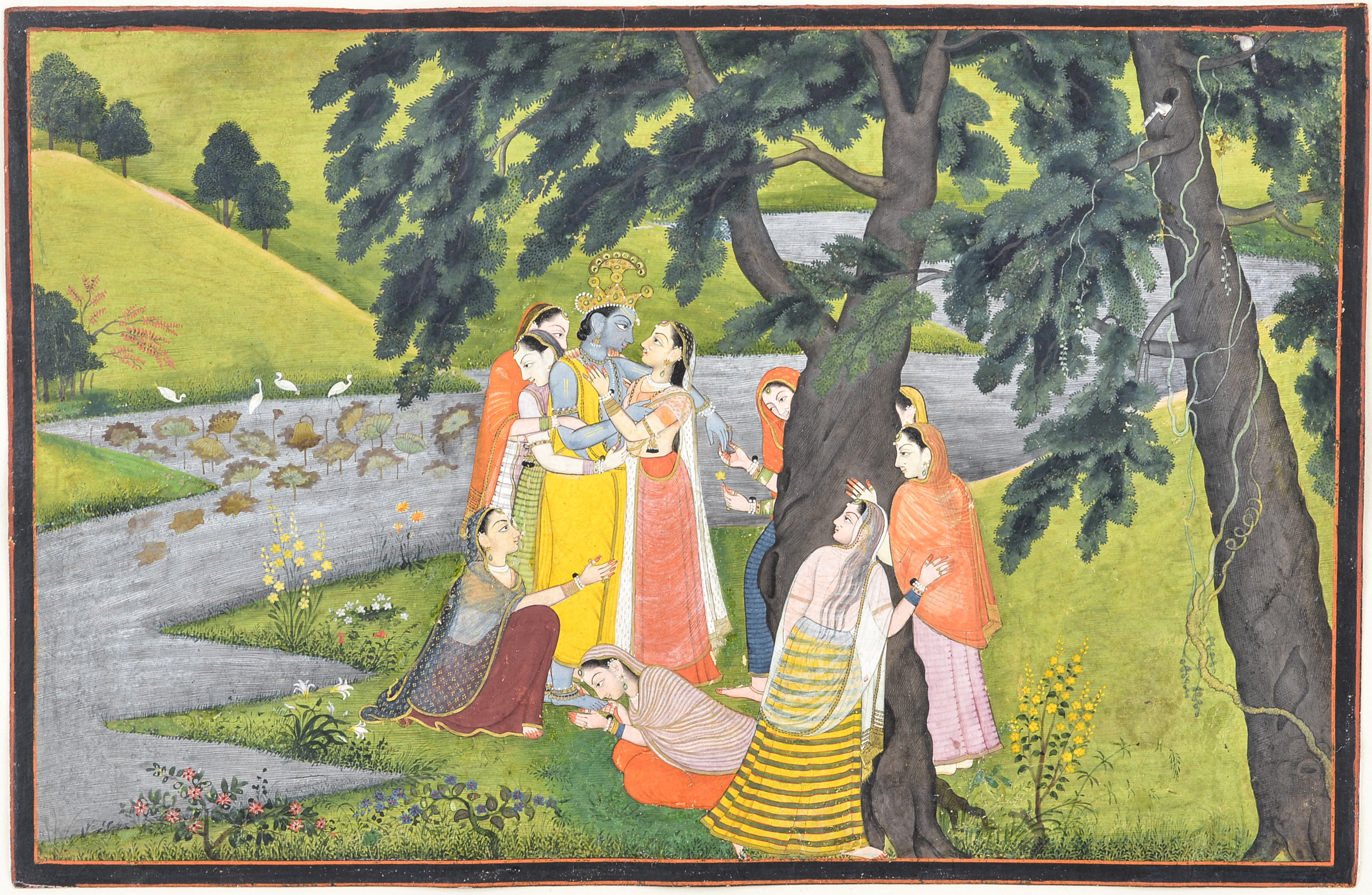
If a person is completed by another, where does the self end?
Three theories of a body
Seen together, these works do not trace a single history of the human figure. They offer three incompatible answers to one question. In one, the body stands alone, a complete self; in another, it loosens its claim to selfhood; in the third, it becomes fully meaningful only in relation. The comparison does not resolve the differences. It makes them visible.
The writing can only point. The looking is yours.
All works open-access, verified at The Metropolitan Museum of Art, CC0. Cite as: [Title]. [Culture, date]. The Metropolitan Museum of Art. CC0. Retrieved via Open Museum. Confirm status at source before commercial or sensitive use.
Every work in this essay lives at open-museum.art. See each in full detail at its source.
Curation and narrative by Open Museum · open-museum.art
Set of 3 museum-grade prints · rights-verified at source
Not three images only, but three ideas of the human brought into one room.