Deep-zoom viewer. Use plus and minus to zoom, arrow keys to pan, zero to reset, and f for full screen.
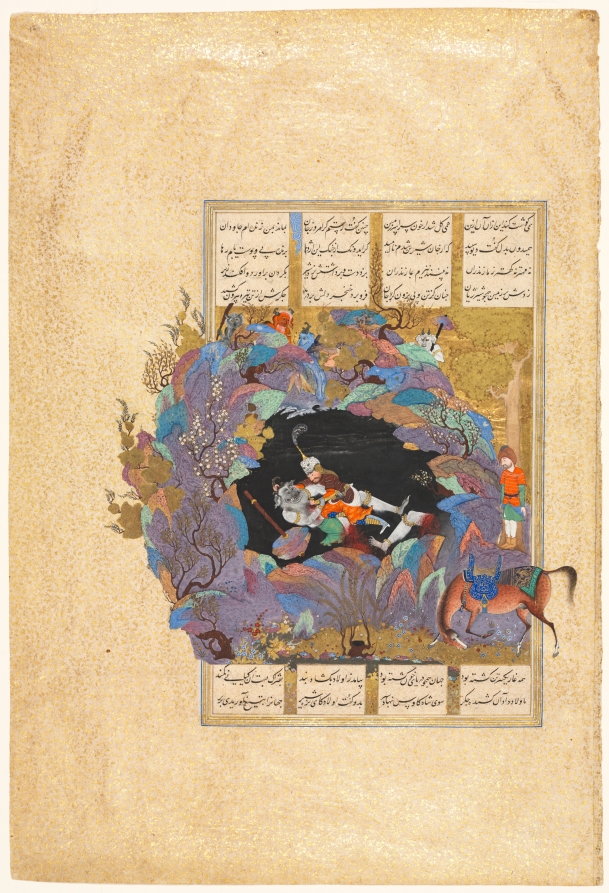
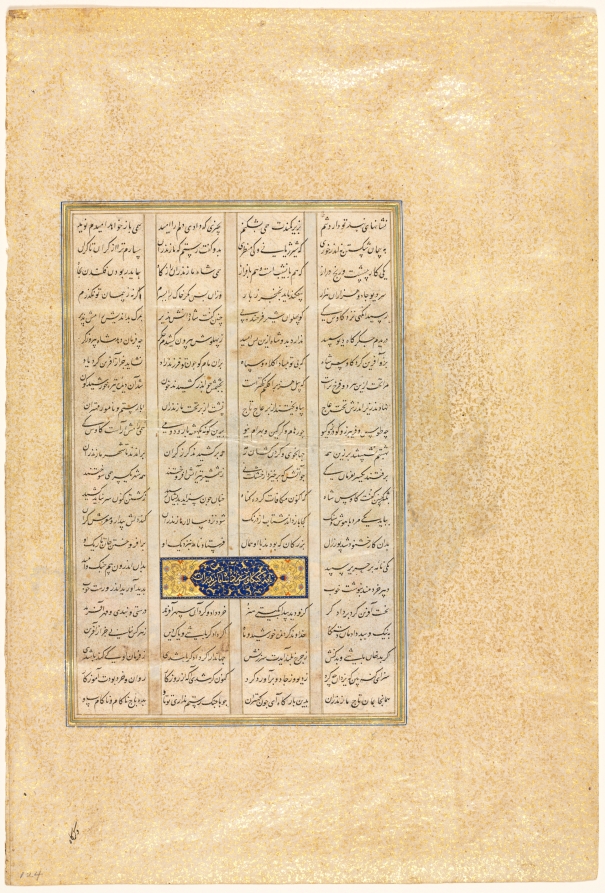
Rustam's seventh course: He kills the White Div, folio 124 from a Shah-nama (Book of Kings) of Firdausi (Persian, about 934–1020)
Mir Musavvir · 1520–37
Prints coming soon Museum-grade fine-art prints, clearance-verified. Tell us you are interested
CC0 1.0 Public Domain Dedication
What you may do with this work:
- Commercial reproduction Yes CC0 public-domain dedication permits all uses, including commercial.
- Derivative works Yes CC0 public-domain dedication permits modification and derivative works.
- Attribution required No CC0 public-domain dedication requires no attribution as a condition of reuse.
This reflects the licence the source museum published, read by the open engine. Rights can change and institutional terms can qualify a licence, so confirm at the source before any commercial use.
Generated by the open engine. Copy a ready-made citation:
Mir Musavvir, Rustam's seventh course: He kills the White Div, folio 124 from a Shah-nama (Book of Kings) of Firdausi (Persian, about 934–1020), 1520–37. Gum tempera, ink, gold, and silver on paper. Cleveland Museum of Art, CC0. https://clevelandart.org/art/1988.96
Mir Musavvir, Rustam's seventh course: He kills the White Div, folio 124 from a Shah-nama (Book of Kings) of Firdausi (Persian, about 934–1020). 1520–37. Cleveland Museum of Art. CC0. https://clevelandart.org/art/1988.96.
Rustam's seventh course: He kills the White Div, folio 124 from a Shah-nama (Book of Kings) of Firdausi (Persian, about 934–1020) (Mir Musavvir, 1520–37)